Hydrogen storage technology has reached a critical breakthrough, with the global hydrogen storage market projected to reach $7.5 billion by 2025 according to McKinsey’s latest energy report. Modern underground storage solutions now offer unprecedented safety levels while maintaining scalable capacity from 1 to 100 tons. Could your industrial facility benefit from proven hydrogen storage that combines minimal surface footprint with maximum operational security? Select hydrogen storage solutions from Vallourec for a greener tomorrow and discover how validated technology demonstrators are reshaping energy infrastructure worldwide.
Understanding Industrial-Scale Storage Capacity Requirements
Industrial hydrogen storage requirements vary dramatically based on application needs and operational demands. Small-scale installations typically handle 1-5 tons of hydrogen for research facilities or pilot projects, while large manufacturing plants may require 50-100 tons for continuous production cycles. Steel production facilities, refineries, and chemical plants represent the highest capacity requirements in the industrial spectrum.
Also to see : What Strategies Can Entrepreneurs Use to Overcome Challenges in the UK Business Environment?
The technical challenges multiply exponentially with scale increases. Storage systems must maintain consistent pressure levels across massive volumes while ensuring rapid deployment capabilities during peak demand periods. Underground modular designs have emerged as the preferred solution, offering superior space efficiency compared to traditional above-ground tanks that consume valuable industrial real estate.
Economic considerations create complex decision matrices for facility planners. Initial capital investment scales non-linearly with capacity, but operational costs per kilogram decrease significantly in larger installations. Safety infrastructure requirements remain constant regardless of scale, making high-capacity systems more cost-effective over time. Modern storage solutions achieve optimal balance between capacity flexibility and economic viability through proven modular approaches.
This might interest you : What Factors Influence the Success of a UK Business?
Advanced Safety Protocols for Underground Hydrogen Containment
The safety of underground hydrogen storage is based on multi-level protocols that far exceed traditional industry standards. Each facility undergoes exhaustive validation, including overpressure resistance tests, controlled leak simulations, and comprehensive certification of the materials used.
Monitoring systems incorporate ultra-sensitive detection sensors capable of identifying hydrogen concentrations of less than 0.1% in the surrounding atmosphere. This early detection technology automatically triggers isolation and secure ventilation protocols, ensuring an immediate response in the event of an anomaly.
The major innovation lies in the modular design of the facilities, allowing for instant sector isolation. Each storage module has redundant safety systems, including automatic decompression valves and reinforced containment barriers. These advanced protocols enable the safe industrial storage of 1 to 100 tons of hydrogen with a minimal footprint.
Key Components of Modular Underground Storage Systems
Modern modular underground hydrogen storage systems integrate multiple sophisticated components to ensure safe operation at industrial scale. Each element works in harmony to deliver reliable, high-pressure storage while maintaining strict safety protocols throughout the entire system lifecycle.
- Underground infrastructure: Reinforced concrete chambers and steel pipe networks designed to withstand extreme pressures up to 700 bar, with corrosion-resistant materials for long-term durability
- Compression systems: High-efficiency compressors with multi-stage compression capabilities, enabling optimal hydrogen density while minimizing energy consumption during storage operations
- Safety devices: Pressure relief valves, emergency shutdown systems, and leak detection sensors that automatically respond to any deviation from normal operating parameters
- Monitoring technologies: Real-time sensors for pressure, temperature, and gas composition monitoring, integrated with automated data logging and alert systems
- Control interfaces: Centralized command systems offering remote operation capabilities, predictive maintenance scheduling, and seamless integration with existing industrial control networks
These integrated components ensure that modular systems can scale from 1 to 100 tons of hydrogen storage capacity while maintaining consistent safety standards and operational efficiency across all deployment scenarios.
Proven Technology Validation Through Real-World Testing
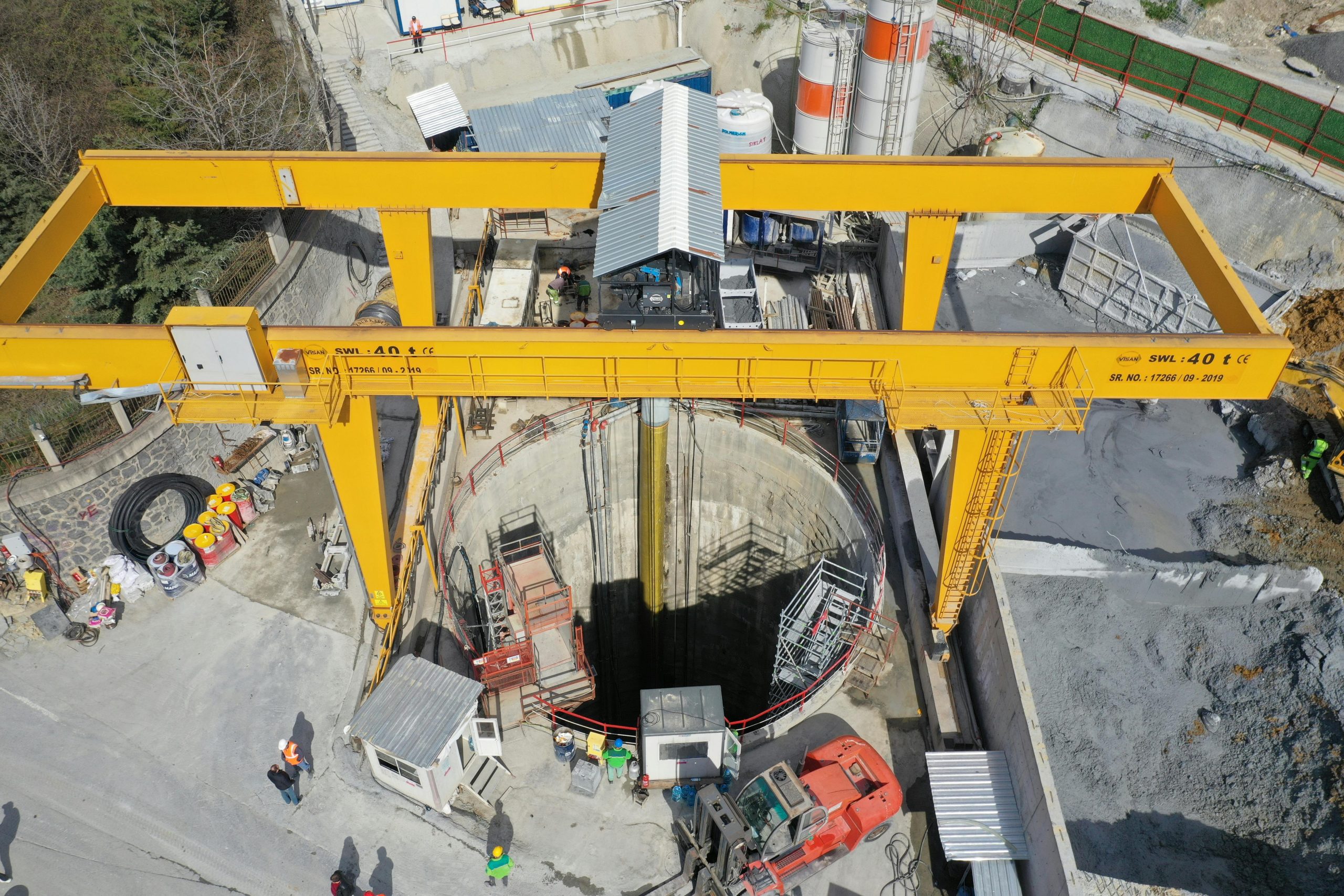
The transition from laboratory concepts to industrial reality demands rigorous validation through comprehensive testing protocols. Vallourec’s hydrogen storage technology has undergone extensive real-world evaluation at their Aulnoye-Aymeries facility, where a fully operational demonstrator validates every aspect of the storage system’s performance and safety parameters.
This functional demonstrator has successfully proven the technology’s capability to handle hydrogen storage operations at industrial scale. The testing program encompasses pressure cycling, material integrity assessments, and safety protocol validation under various operational conditions. These comprehensive trials have confirmed the system’s ability to maintain consistent performance while meeting the strictest safety standards required for large-scale hydrogen storage applications.
The validation results demonstrate remarkable operational reliability, with the system successfully completing thousands of pressure cycles without degradation. This proven track record provides industrial clients with the confidence needed to implement hydrogen storage solutions at scale, knowing the technology has been thoroughly tested and validated in real-world conditions before deployment.
Optimizing Surface Footprint with Innovative Design Solutions
Modern industrial facilities face increasing pressure to maximize efficiency while minimizing their physical footprint. Traditional hydrogen storage methods often require extensive surface infrastructure, consuming valuable industrial real estate and limiting operational flexibility.
Underground modular storage systems revolutionize this approach by dramatically reducing surface requirements. Where conventional storage tanks might occupy several thousand square meters, modular underground solutions can achieve the same capacity while maintaining minimal surface presence. This space optimization allows manufacturers to dedicate more area to core production activities.
The modular design offers exceptional flexibility for facility planning. Individual storage units can be positioned strategically across the site, adapting to existing infrastructure constraints and future expansion plans. This approach eliminates the need for large, centralized storage facilities that often dictate entire facility layouts.
Industrial operators benefit from reduced construction complexity and faster deployment times. The scalable architecture means storage capacity can grow incrementally with production demands, avoiding the substantial upfront investments required by traditional large-scale storage installations. This adaptability proves particularly valuable for manufacturers transitioning to hydrogen-based processes.
Cost-Effectiveness and Return on Investment Analysis
Underground hydrogen storage solutions offer a significant economic advantage in the long term. The initial installation costs, although substantial, are quickly offset by reduced operating costs and the elimination of surface constraints.
The modularity of the systems allows manufacturers to tailor their investment to their actual needs. A capacity of 1 ton can be gradually increased to 100 tons without completely rebuilding the infrastructure. This scalable approach optimizes return on investment by avoiding costly overcapacity.
Economies of scale become particularly attractive above 10 tons of capacity. Underground maintenance costs are approximately 30% lower than conventional installations, mainly due to natural protection from the elements and the thermal stability of the subsoil. This operational efficiency ensures sustainable profitability for large-scale industrial projects.
Frequently Asked Questions About Industrial Hydrogen Storage
What are the safest ways to store hydrogen at industrial scale?
Underground compressed gas storage with proven safety protocols offers the highest security. Advanced monitoring systems, leak detection, and rigorous testing ensure safe operations at industrial volumes.
How much does it cost to install a hydrogen storage system?
Installation costs vary significantly based on capacity, location, and safety requirements. Underground modular systems typically offer better long-term value through scalability and reduced operational expenses.
What safety measures are required for underground hydrogen storage?
Comprehensive safety measures include continuous monitoring systems, automated leak detection, emergency shutdown protocols, and regular safety audits. Underground placement provides additional natural containment and protection barriers.
How much hydrogen can be stored in a compressed gas storage system?
Modern compressed gas systems can store between 1 to 100 tons of hydrogen, depending on configuration. Modular designs allow for capacity expansion as industrial needs grow.
What are the benefits of modular hydrogen storage versus traditional methods?
Modular systems offer scalable capacity, reduced surface footprint, enhanced safety through underground placement, and proven technology validation. They adapt to changing industrial hydrogen requirements efficiently.